Better Futures Begin With Better Thinking
Global Visibility Blueprint™ began with a simple observation:
Good work does not always explain itself.
People can create value without being recognised. Teams can work hard while solving the wrong problem. Organisations can collect more data without necessarily making better decisions.
Visibility was the first problem we learned to see. It was not the last.
Because what people see shapes the questions they ask. The questions they ask shape how they think. How they think shapes the decisions they make. Those decisions shape what becomes possible.
Better Questions. Better Thinking. Better Decisions. Better Futures.

Yusuf Datti Yusuf
Every role became a lab for one rule.
I did not start by designing systems. I started where problems show up first. On the frontline. In customer care, in NOC operations, in retail sales. Across every role and every company, I saw how work actually flows inside organizations. What gets escalated. What gets delayed. What never gets seen.
Results don't speak unless you make them seen.
That pattern repeated for fifteen years. Good work was happening everywhere I looked. But it was not always moving. Not always visible. Not always credited to the person who did it. Performance was not the problem. Visibility was.
So I built a system to fix the structural layer. Not the people layer. But the deeper I went, the clearer something became: making work visible was never really the end goal. It was the first door into a bigger question.
Once people can see clearly, they start asking better questions. Better questions change how they think. Better thinking changes what they decide. And better decisions are what actually build better futures. For individuals, for teams, for the organizations they belong to.
It didn't move away from visibility. Visibility was the first door. Better Futures was always the destination.
Every pattern in this system started as one person's story before it became a pattern at all. Better societies don't begin with societies. They begin with people, each carrying a different story, seeing something differently, making a different decision. That is why it's Better Futures, not Better Future.
Where better thinking eventually leads.
A better decision made by one person is real, but it is small. The actual ambition is what happens when better seeing, better questions, and better thinking compound. Person to team, team to organization, organization to institution, institution to the wider society they serve.
That is a long chain, and no single diagnostic or playbook closes all of it. What follows is the part of the system built so far. The part that exists today, not a promise of what it will eventually become.
The roles that built the framework.
Service with a Smile · Dec 2023
Salesman of the Year · Apr 2022
Break Free Award – Execution Excellence · Feb 2022
Visibility doesn't replace performance.
It multiplies it.
What colleagues observe.
"Smart, intelligent, resilient and persistent in delivering results… challenge-motivated, result-oriented, exceeds expectations with minimal supervision."
"Highly intelligent and pro-active… has what it takes to lead and be followed. A good teacher and always ready to help."
"Intuitive, agile… continues to amaze with the way he approaches tasks. Highly recommended."
Where GVB fits.
Global Visibility Blueprint™ began with the visibility problem. And it stayed the name, because visibility is still where the work starts for almost everyone who arrives here. But visibility alone cannot produce better outcomes on its own. It only opens the door to better questions, better thinking, and better decisions.
So the system grew. Not away from visibility. Around it. Today, "GVB" names both the original visibility engine and the wider body of work it grew into: the assessments that measure how someone sees, thinks, and decides; the diagnostics that surface where structure. Not effort. Is the real gap; and the Institute where that evidence becomes deliberate capability practice.
Two things share the initials, deliberately, not by accident: Global Visibility Blueprint™ (GVB™) is the visibility capability specifically. One of five engines inside the wider Organizational Intelligence model. Guide · Validate · Build is the operating approach that runs underneath the whole body of work, not a redefinition of what the letters stand for.
What this is becoming.
What began as a framework for understanding visibility is becoming a connected system for understanding how people, teams and organisations see, think, decide and progress.
The opportunity is larger than any single programme, diagnostic or publication. Across assessment, organisational intelligence, learning, certification and institutional application, the same underlying question remains:
How do we help better decisions produce better futures at greater scale?
That creates room for collaboration with organisations, institutions, researchers and others interested in building the infrastructure for better human and organisational decision-making.
Explore Strategic Collaboration →The doctrine in print.
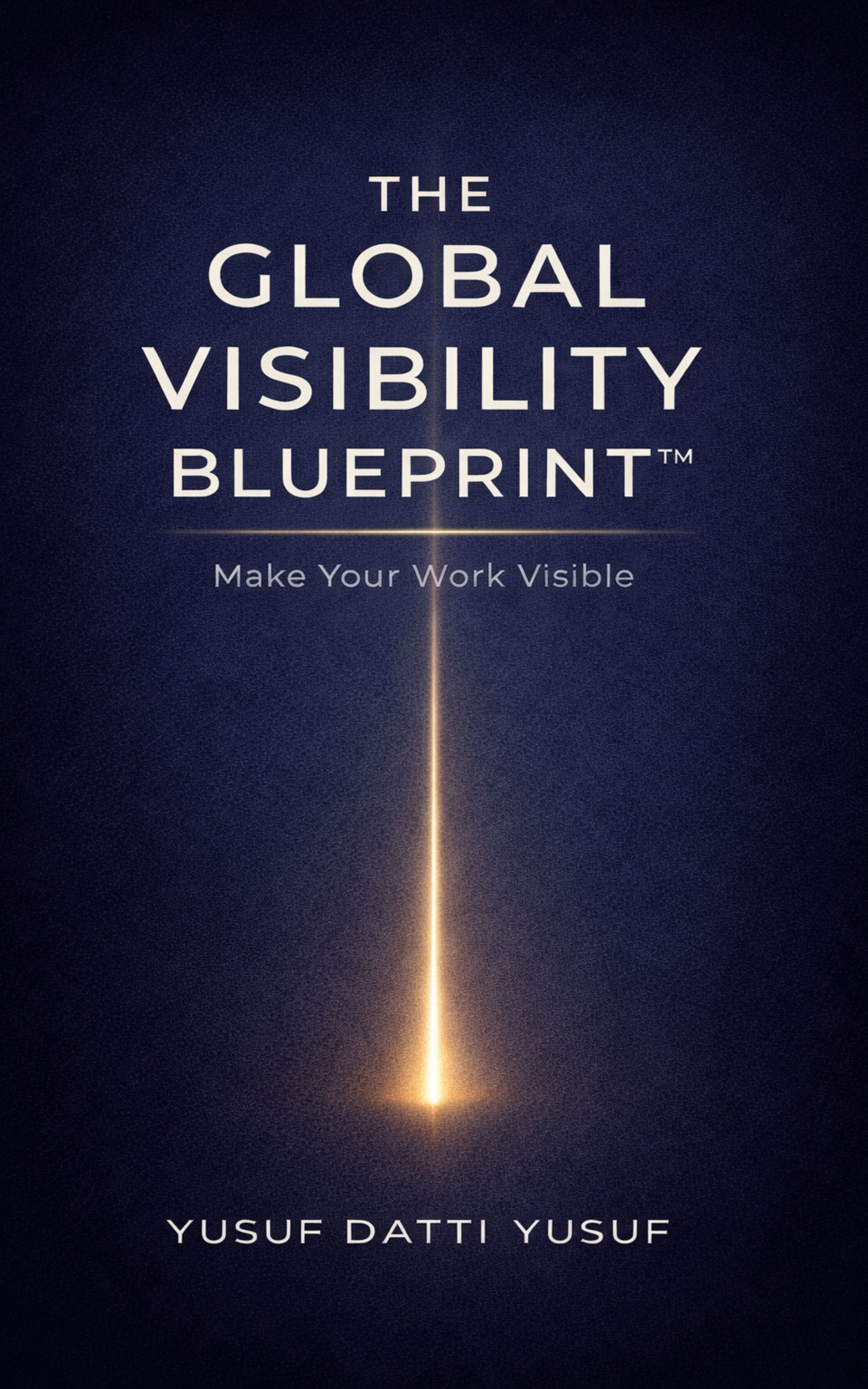
That is usually where the system is still waiting. The Structural Leadership Index™ reveals exactly where your leadership authority lives. In you or in the structure.